Jim Rohn’s Wisdom on How to Handle Tariffs

A large green cargo ship docked at a dock

In early 2025, the United States government introduced a sweeping set of global tariffs—taxes on imported goods designed to protect American industries and encourage domestic production. While this move may seem like a headline for economists or policymakers, the truth is much more personal: These tariffs are poised to reshape how much you spend, what you save, and how you navigate your financial future. But this isn’t just a story about economics. It’s a story about resilience, growth, and how we choose to respond in times of uncertainty. What Are Tariffs, and Why Are They Making Headlines? Tariffs are essentially taxes placed on imported goods from other countries. The goal is to make these foreign items more expensive so that consumers buy more American-made alternatives. While this might boost certain industries over time, the immediate impact is a rise in consumer prices. According to The Guardian, vehicle prices could increase by 16%, and iPhones may rise by over 30%. The Yale Budget Lab estimates the average household will see an additional $3,800 per year in expenses due to these tariffs. 🔍 Quick Visual: How Tariffs Hit Home Item Current Price Estimated Post-Tariff Price iPhone $1,000 $1,300+ (📈 +30%) Mid-range Car $35,000 $40,600 (📈 +16%) Household Spending — +$3,800/year Sources: The Guardian, Yale Budget Lab It’s Not Just About News — It’s About Your Life If you’re watching inflation rise and hearing talk of global recession, you might be wondering: What can I actually do about it? One answer lies in how you respond. Best-selling author Jim Rohn reminds us that the economy — like life — goes through cycles of prosperity and recession. These seasons are natural. The key, he says, is preparing your mindset and habits for both. “Don’t wish it were easier; wish you were better.” — Jim Rohn The Philosophy That Builds Financial Resilience This timeless quote from personal development legend Jim Rohn captures the essence of how we should face financial adversity. Instead of hoping for easier times, we should invest in becoming more capable, more resilient, and more resourceful. Another one of Rohn’s powerful reminders adds: “Your philosophy is the greatest determining factor in how your life works out.” What you believe, how you think, and how you act in response to challenges — these shape your financial outcomes more than external events ever could. 🧠 Reflective Questions for Financial Resilience Am I dedicating time daily to improve myself and acquire new skills? Am I taking full responsibility for my financial choices, or blaming the economy? Do I view uncertainty as an opportunity to gain wisdom and resilience? Is my philosophy guiding me toward my desired financial future? These aren’t just self-help questions — they’re tools for survival and success in a shifting economy. 💡 Practical Steps to Navigate 2025’s Financial Challenges Revisit your budget. Track every dollar and trim where necessary. Invest in skills. Learning something new could lead to higher income or new opportunities. Buy essentials in bulk. Avoid price surges on staple goods. Review your investments. Ensure your portfolio is diversified and tariff-aware. Build your emergency fund. Even small savings create powerful security. Final Thoughts The 2025 tariffs are real, and so are the challenges they bring. But you are not powerless. With the right mindset, a reflective philosophy, and practical financial habits, you can emerge stronger — even in tough times. So instead of waiting for things to get easier, take Jim Rohn’s advice: get better. Make wiser choices. Take more focused action. And build a future that no policy or economic cycle can derail. .

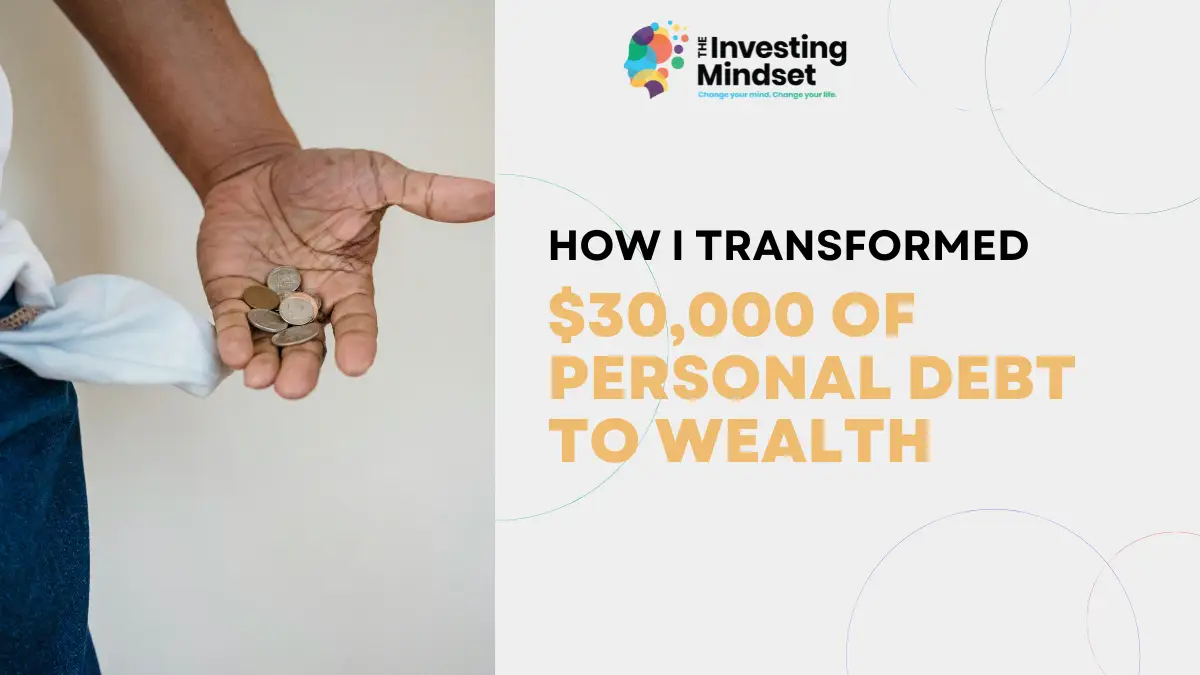
How I Transformed $30000 Personal Debt to Wealth

Personal debt is one significant obstacle to financial independence. According to the American Consumer and Financial Services Bureau, almost 40% of Americans have more than $336,000 in personal debt.  Almost ten years earlier, I was in debt. I owed over $30,000 in credit card balances, personal loans, and unpaid taxes. Personal Debt Affects  Your Mental Health I must admit it was not a great time in my life. I hardly slept, and I lived in denial of the fact that being indebted was the cause of my emotional disturbance.  Looking back at those years of being indebted, I realized I was suffering from the impact of personal debt on my mental health. Individuals who have high levels of debt are more likely to develop anxiety and depression, according to findings from the British Home Panel Study (BHPS )in the UK. The family and relationship of an individual with personal debt also suffer from the impact of their behavior. I remember how my wife broke down in tears and wished we were out of debt during our New Year’s Eve reflection meetings. It was heartbreaking to watch my wife suffer because of my poor financial decision that was pulling our household towards bankruptcy. I decided to do something different. Choose Financial Freedom and Take Action I decided to change my ways and pursue financial freedom instead of slavery to my creditors. My financial situation appeared hopeless; however, with determination and hard work, I pulled myself from the abyss of personal finances to become financially free. What did I do differently to move from debt to financial freedom? Stop Accumulating Personal Debt My first step was to stop ignoring my debt and face the reality of my financial situation. I gathered all the statements for my credit card balances, overdrafts, personal lines of credit, and mortgages and recorded my liabilities. Next, I created a balance sheet of my financial scorecard that reflected my mindset and net worth.  I used the tools I found in reading  Robert Kiyosaki’s Rich Dad, Poor Dad book on financial education.  Get Understanding About True Wealth I used my understanding of my cash flow quadrant to identify my beliefs and attitudes toward managing money. Using the lessons from Kiyosaki’s book, I realized that true wealth comes from having more assets than liabilities. Using Robert Kiyosaki’s principles, I created a personal balance sheet to determine my income, expenses, assets, and liabilities. Why? Because my balance sheet gave me an idea of my net worth. By Knowing my net worth, I was able to have more clarity about my financial situation. After determining my indebtedness, I decided to stop accumulating more debt. I committed to paying off my outstanding debts. Use The Debt Acceleration Method to Pay off Debt  I was interested in paying off my debt quickly and managing my money correctly towards accumulating wealth.  I used the debt acceleration method to repay my debt in 5 years. I was amazed at how easily I could become debt-free with a simple process like the debt acceleration method. I want to discuss debt acceleration more because it is possible without declaring bankruptcy or debt consolidation. The debt acceleration method involves reallocating money toward paying off debt. It is a form of delaying gratification.  Debt acceleration works by allocating a portion of your current income to pay off your debts and the regular monthly payments you already make toward your outstanding loans. In my case, I could allocate $150.00 for debt acceleration. I applied the $150 plus the minimum payment required toward my credit card debt with the highest interest rate. I continued to pay the minimum balances on my other debts.  As a result, I was able to pay off my high-interest credit card debts in just six months. As soon as I paid off the high-interest credit card debt, I now had $370 ($200 my minimum balance plus $150 my debt accelerator) to add to allocate to paying off the plus the minimum payment required for the following credit card balance on my list. I then repeated this method until I could pay off all my debts except for my mortgage, which had a low interest rate. Paying off my personal loans and credit card debts allowed me more money to save and gave me better financial security.  Keep Track of Your Progress with a Spending Plan I began tracking my money each month to improve my financial situation. I used a spreadsheet to record my income, expenses, assets, and liabilities. Every month, I entered my income and expenses into separate columns, listing my liabilities at the bottom. I listed my assets in another column to better understand my financial situation. I aimed to pay off my debt, save more, and increase my assets to generate more income. To achieve this, I stopped using credit cards for impulse buying and began using my debit card. Using my debit card instead of a credit card for daily expenses helped me become more disciplined with my payments. I also downloaded a banking app to track and create a spending plan. Unlike a budget, a spending plan was a more intentional way to allocate my resources according to my earnings. It helped me avoid the depressing feeling of quickly running out of money and being unable to afford things. Use A Spending Plan To  Build Wealth  Let’s explore the concept of a spending plan more deeply. Developing a spending plan empowered me to focus on building my finances without falling into debt again. A spending plan is a modified budgeting technique. Firstly, you need to determine the purpose of your expenses and allocate your resources accordingly. Secondly, you need to ask yourself whether spending that money or engaging in that activity is necessary. The beauty of a spending plan is that it prevents frivolous spending while allowing you to achieve your objectives. For instance, I created a spending plan for entertainment while saving for my children’s college education. By analyzing our

What I Learned From My Worst Financial Mistake

financial mistake theinvestingmindset.com

“Failure is a great teacher. When you make mistakes and learn from them, you have valuable experiences to share.” Steve Harvey What do you do when you make financial mistakes? Do you take responsibility for your errors and move on?  Or do you make excuses, complain, and never learn from your mistakes? Marcus Cicero, the great Roman orator, said…“Any man can make mistakes, but only an idiot persists in his errors.” I have been making financial mistakes all my life. I have made some mistakes that are of little consequence. I have also made big money mistakes that I wish I had not made. The Lessons of Making Financial Mistakes Two things happen when you make big, whopping financial mistakes like the one I am about to share. The first thing you feel is the pain that comes with it. Yes!  You feel pain. The second consequence of making financial mistakes is learning something that will make you wiser. Or if you choose not to learn from your mistake, you keep repeating the same mistakes. Business Mistake Early On I made one of the worst financial mistakes early in my business career.  I want to share my story. Shortly after I graduated from Med school…I decided to become an entrepreneur because I realized early enough in my teen years that the fastest way to financial freedom was to be a successful investor or business owner. Yes, it’s true. In his book, The Millionaire Next Door, Dr. Thomas Stanley found that most millionaires were business owners or successful investors. A few professionals become wealthy if they own a thriving professional practice or have invested their income wisely. I quickly set out on a plan to start my first business venture: a resume writing and project writing business that served science and medical students, resident doctors, and postgrad students at my medical school. I was so excited about becoming a millionaire at an early age that I skipped crucial steps to starting a business -doing market research and business analysis to check if my business would be viable. “What could go wrong? This business is a no-brainer,” I told myself, standing in the mirror every morning. I had some fantastic dreams about myself …traveling the world…living the life of a millionaire…I had my head in the sky. A Flawed Funding Strategy I decided to fund the business with my first three months’ salary because I did not want anyone to talk me out of starting my first business and because I earned extra income from doing a weekend side job. My junior brother wanted to be my partner but had no funds to invest. As his equity capital, he brought a photocopier that he got as a gift from my cousin. I agreed to bring him on board as a partner. The decision to accept my brother’s “equity”= (a broken photocopier) proved to be an expensive mistake that was the doom of the business from the get-go. Why? The photocopier that was supposed to be my business’s cash cow was a liability.  The photocopier was obsolete and not a popular brand with readily available parts and service technicians who could fix the machine if there was a problem in my area.  Instead of earning income, I spent my hard-earned money fixing this machine. To make matters worse, I advertised and marketed the business to many of my friends on campus, but I could not fulfill my orders. As a last resort, I turned over my customers to my competitors, and my losses piled on and on until I pulled the plug on the business. By the time I had closed the business, I had lost over $900. Losing $900  was financially depressing because my monthly net income was $365.  Moving On and Learning From Mistakes My business loss affected my financial well-being because I had no money to buy furniture for my flat. As a result, I slept on the carpet in the bachelor’s suite I rented. What may make the experience more depressing was how I felt when I visited my colleagues living in tastefully furnished, air-conditioned rooms.  My saving grace from financial ruin was the extra income I earned from my weekend job. I felt ashamed of myself and beat myself up in the days after my first business collapsed. It took almost two years to overcome the loss, but I dared to move on. I have moved on from my first business failure to launch other successful ventures. How was I able to move on from my past failure? I was able to bounce back from my mistake by doing two things. First, I never took the loss of my business personally. I learned from my mistakes and committed to doing better in my next venture. Rich Schefren, the founder of Strategic Profits, said, Resilience – the ability to bounce back quickly from a setback and put disappointments behind you – is critical for business success and in most areas of life. Building Wealth Bores Down to Getting Results The moral of Schefren’s statement is that you don’t have to allow making mistakes to stop you from taking risk in business Another important thing I learned from the mistakes that led to the failure of my first business was that it allowed me to develop the right attitude and character to become a successful entrepreneur. Why? Because I found that building wealth bores down to getting results and not making excuses. If your business is successful, it will show in your profits. If your business fails, it will show in the losses you pile up. It takes a particular character and mindset to succeed in business, industry, or profession…Unless you have the traits for success, you are going to lose. I learned this harsh reality when I started in the business after I failed in my first venture. What changed things for me was how I responded to my mistake. I chose to face the truth and ask

Why You Need To Fail To Succeed

How do you feel about failure?  What do you do every time you fail? Do you stay down and cry? Or do you get up, dust yourself and try again? Take a moment to think about these questions because your response and emotion to failure are the single most important factors to your success. A study conducted by the Northwestern University’ Kellogg School of Management showed that failing early in your career increases your chances of future success. Let’s be honest. You are going to fail along the way.   You must not allow failure to stop you from achieving your dreams. You must not allow the fear of failure… stop you from taking risks. The key is not to let our fear of failure keep us from taking action. The greatest mistake you can ever make is to give in to fear, that is… the fear of failure. If you are afraid of taking the necessary steps, decisions and action you need to pursue what you really want to do right now…then you are suffering from the fear of failure. The fear of failure will rob you of happiness, wealth, and success in life. Fear will suck the life out of you…fear will turn you into a zombie…fear will make you show up for the job you hate just because you have to pay your bills. The fear of failure will force you to remain in an unhappy relationship…living with the fear of failure feels like being stuck in a rut – that is an open grave with its ends kicked out. The good news is you don’t have to live your life like this any more. I am going to show you how to break free from the shackles of the unending cycle of failure..that you have been experiencing. In fact you will find out that failing is not a bad experience to have.   Yes you heard right…”That you failed at a business or in a relationship is not the end of your life. “   I believe you need to fail to succeed. Why? Because when you fail at something and learn from the event…your chances of overcoming your past failing and becoming successful are higher. The following passage from the bible talks about why failure is good for success… “Very truly I tell you, unless a kernel of wheat falls to the ground and dies, it remains only a single seed. But if it dies, it produces many seeds.”- John 12:24 The moral of this holy passage is that … To achieve success, you will fail and make mistakes on the journey to accomplish what you truly desire. Let’s talk about why failure is good for success. Failure is good for success because they are the events that build our character and test our resolve to accomplish what we truly want in life. When you make mistakes and experience setbacks, which you must…and get up each time you fail forward. Renowned British writer CS Lewis said “Failures, repeated failures, are finger posts on the road to achievement. One fails forward toward success”. How do you fail forward?  The answer is you need courage. You must have the courage to act in the face of your fear of failure. Robert F. Kennedy said “Only those who dare to fail greatly can ever achieve greatly.” Winston Churchill said “Success is not final, failure is not fatal: it is the courage to continue that counts”. Courage is what you need when you feel that the odds are against you to be successful at what you want to do.  Courage is what you need to overcome your doubts about making it in business, building wealth …or getting to the top of your career. To have courage is to feel the fear of doing what you really want to do…and doing it anyway. Susan Jeffers, bestselling author of Feel the fear and do it anyway said the only reason the majority of people are afraid to do what they really want to do is because…they think they cannot handle the consequence of failure. I know about the pain that comes with failing! I also know what it takes to bounce back up. Because I have had the courage after every crash in my career, business and relationships over the last few years. I would like to share a story…about one of my many crashes and how I bounced back… I hope it will help you deal with whatever situation you are dealing with right now. A few years ago..at the start of  my real estate investing career…  I bought a three bedroom apartment in South London in the belief that  “You cannot go wrong with real estate investing”. Well to my shock and surprise… my decision to buy this apartment turned out to be the worst and costliest financial mistake I have ever made. Everything that could ever go wrong with investing in a property went wrong!  …Because I had  not done my due diligence, I had to fork out over $6000 for a joint repair due for the roofing of the  building. The Homeowners Association fees were nearly 20% of the cost of the mortgage. I had to pay  $5000 to fix the outdated heating system …. This property was like Freddy Krueger in the movie Nightmare on Elm Street!  It felt like I was having nightmares and then waking up to experience the financial nightmare about the property.  My decision to invest in this property took a hit on my mental health. For the first time in my life I was having panic attacks every time I saw the property’s mortgage statement or whenever I got a call about the property. I was winding down a financial hole…until one day …when I felt I had a lifeline to deliver me from financial hell. I saw a light at the end of  my dark money tunnel. You see, it is at those times when you are desperate… that you find  inspiration.

How To Start A Part Time Business When You Have A Day Job

I am sure you’ve heard that the fastest way to build wealth is to start a part time business. The obstacle most people who desire to own a business face is:  how to start a part time business while simultaneously keeping a day job. I had the same problem until ten years ago…when I  decided to start my part time  business. I worked full time as a hospital doctor in training. I worked various shifts during the week and on weekends. I was away from my family most of the time.  In addition to my job, I also had to prepare for regular medical exams. When I decided to start my own part-time business, I must admit it was a scary experience because of my busy schedule. At the same time, I had bills and other financial obligations to fulfill at the end of each month. Nevertheless, I committed to doing whatever it took to start a part time business from the get-go. There are several steps I took that I believe contributed to the success of my part time business at the same time that I held a 9-5 job. Becoming a  part time business owner I decided not to quit my job at the start-up phase of my business. Instead, I chose to be a chicken entrepreneur. I decided to become a chicken entrepreneur because of my previous experience with starting my first business. You see when I was younger and had ideas about starting a business… I used to think that an entrepreneur was someone who quit his day job… put all his savings into a business …then, after many trials and errors, became wealthy. I quickly realized that my Hollywood-inspired myth about starting a business was more fantasy than the truth. I can tell you both from experience and observation that you don’t have to take uncalled-for risks to start a successful business. Become a chicken entrepreneur What you need to do is become a chicken entrepreneur. Bestselling author and business expert Michael Masterson define a chicken entrepreneur is somebody who keeps his day job while he gets his ideal job going in the evenings or on weekends. I wish I had heard of the Idea of being a chicken entrepreneur because I would have saved money instead of losing over $30,000 from starting failed business ventures. Ouch! When I reflect on my past journey as an entrepreneur, I think starting as a chicken entrepreneur is  a bettpath for anyone starting a business. Why? Because starting a  part time business allows you to take risks and at the same time enjoy the safety of having a steady paycheck. You should view your day job as your business loan to fund your dream job. That was how I saw my full-time job when I started my entrepreneurial journey. My day job was the business loan that supported my part time business. My day job wrote off the business loan when my business ventures failed. If you are thinking about starting a business when you have a day job and are scared about quitting, why not consider starting as a chicken entrepreneur? Why?  Because starting as a chicken entrepreneur is less risky than quitting your job to start a business full-time. I want you to think about this. Would it not be better to have a job you can fall back on just in case your business fails? I think it makes sense that you start a part time business.